The word ‘karma’ has become quite familiar, often tossed around in conversations about fate or destiny. But at its heart, karma is simply the principle of cause and effect – the understanding that every action creates a reaction. It’s not necessarily about punishment or reward from some external force; rather, it’s an inherent law woven into the fabric of existence, suggesting that our choices shape our experiences.
Think of it like this: if you plant an apple seed, you can reasonably expect to grow an apple tree. The seed (your action) leads to a specific outcome (the tree and its fruit). Karma works similarly – the intentions behind your actions, whether conscious or unconscious, set in motion consequences that eventually manifest.
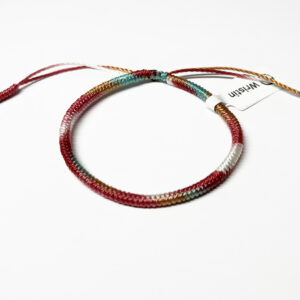
It’s a concept that naturally invites questions and deeper exploration. While it’s often associated with Eastern philosophies like Buddhism and Hinduism, the underlying idea of personal responsibility resonates across cultures. If you’re curious to learn more about how you can embody this principle in your daily life, perhaps a thoughtfully chosen Tibetan bracelet could serve as a gentle reminder of your intentions and the power within you.
Ultimately, understanding karma isn’t about feeling burdened by past actions; it’s about cultivating awareness and consciously choosing to create positive ripples in the world around you. It’s an ongoing journey of self-discovery and mindful living.
Ancient Roots: Karma Across Traditions
While often associated with Tibetan Buddhism, the concept of karma extends far beyond a single tradition. Its roots run deep within the soil of ancient Indian spirituality, blossoming in various forms across Hinduism and Jainism long before its integration into Mahayana Buddhist thought. Understanding this broader context reveals just how universal the underlying principle truly is – a recognition that our actions have consequences, shaping not only our present but also our future.
Within Hinduism, karma is intrinsically linked to the cycle of reincarnation (samsara). The quality of your past deeds directly influences your rebirth; positive actions lead to more favorable lives, while negative ones result in less desirable circumstances. This understanding fostered a strong sense of personal responsibility and encouraged ethical behavior as a means of improving one’s future existence. Similarly, Jainism places immense emphasis on non-violence (ahimsa) and the accumulation of good karma. Jains believe that every action, even unintentional harm to living beings, creates karmic particles that bind the soul to the cycle of rebirth. Their rigorous practices aim to minimize this accumulation and ultimately achieve liberation.
These ancient traditions profoundly shaped the understanding of karma that we encounter today. The Buddhist interpretation refined these earlier concepts, emphasizing intention as a crucial element in determining karmic consequence – it’s not just what you do, but why you do it. Exploring these diverse origins allows us to appreciate the enduring power and universality of this principle: a timeless truth about cause and effect that resonates across cultures and spiritual paths.
The Ripple Effect: How Belief Shapes Behavior
The fascinating thing about karma isn’t just the idea of cause and effect, but how simply believing in it shapes our behavior. It’s a subtle shift – when we understand that our actions create ripples, not just for ourselves but for those around us, something changes within us. This understanding moves us beyond a purely reactive mindset; suddenly, we’re thinking about the potential consequences of even seemingly small choices.
This belief can be incredibly powerful in fostering personal responsibility. If you genuinely believe that your actions contribute to your experiences – whether positive or negative – it’s much harder to blame external factors for setbacks. It encourages a deeper introspection: ‘What part did I play in this situation? What could I have done differently?’ This isn’t about self-criticism, but rather a gentle and ongoing process of learning and growth.
Perhaps even more profoundly, the concept of karma can cultivate compassion. When we consider how our actions impact others, it naturally leads to greater empathy. It prompts us to ask: ‘How might my words or deeds affect someone else? Am I contributing to their well-being?’ This perspective fosters a sense of accountability not just for ourselves, but for the collective – recognizing that we are all interconnected and influencing one another’s journeys.
The Power of Perception: Karma & The Illusion of Control
It’s easy to get caught up in the idea of karma as a cosmic ledger, meticulously recording every action and doling out rewards or punishments accordingly. But what if we shifted our perspective slightly? What if, instead of focusing on karma as a definitive law of the universe, we considered its power as a framework for understanding ourselves and our choices?
The truth is, whether or not karma exists in a literal sense doesn’t negate its profound impact. The very act of believing in it – of acknowledging that our actions have consequences – can fundamentally alter how we perceive the world and interact with others. This belief system offers a structure for meaning-making; it provides a narrative to explain both joy and hardship, encouraging us to take responsibility for our experiences. It’s a powerful motivator to act with kindness and compassion, knowing those actions will ripple outwards.
This understanding is beautifully reflected in the symbolism often found on Tibetan bracelets – the endless knot representing interconnectedness, the Om symbol signifying wholeness and balance. Wearing a bracelet imbued with such meaning can serve as a constant reminder of this principle: that our intentions matter, and that we have the agency to shape our reality, even if it’s through the lens of belief.
Ultimately, the power lies not in proving karma’s existence, but in embracing its potential to guide us towards greater awareness, responsibility, and ultimately, a more fulfilling life. It’s about recognizing that we are all participants in the ongoing story, and that our choices – however small – contribute to the larger narrative.
A Tangible Reminder: Intention & Your Wristin Bracelet
The concept of karma isn’t just about what happens ‘out there,’ it’s fundamentally about our internal landscape – our choices, our actions, and the intentions behind them. It’s a constant invitation to take ownership; to recognize that we are actively shaping our experience, moment by moment.
Sometimes, abstract ideas need grounding in something tangible. A visual cue, a tactile reminder, can be incredibly powerful when you’re striving for mindful action. Think of it as an anchor for your intentions – a quiet prompt to pause and consider the impact of your choices.
For many, this takes the form of meaningful symbols. The endless knot, representing interconnectedness and the cyclical nature of existence, or the Om symbol, embodying the vibration of creation itself, can serve as constant visual affirmations. These aren’t just pretty designs; they’re echoes of ancient wisdom, reminders to act with compassion and awareness. A bracelet featuring such a symbol – something you’ve chosen specifically for its resonance with your personal journey – can be a beautiful way to carry that intention with you throughout your day.
Ultimately, the power lies not in the object itself, but in what it represents: a commitment to understanding and embodying karma’s principles of responsibility and mindful action. It’s about bringing awareness into every choice, big or small.
Reflect & Reimagine: Your Understanding of Cause & Effect
The concept of karma often gets simplified as ‘what goes around comes around,’ a neat equation of action and consequence. But true understanding delves deeper than that. It’s not merely about punishment or reward; it’s an intricate dance of interconnectedness, where every thought, word, and deed creates ripples extending far beyond our immediate awareness. The traditional view emphasizes the continuous cycle – but perhaps we can shift our perspective to see how we actively participate in shaping that cycle.
Consider a moment when you felt unfairly treated. It’s easy to point fingers, to seek an external explanation for what happened. Yet, karma invites us to look inward. Not to assign blame – certainly not self-blame – but to examine the underlying patterns in our own lives and reactions. What beliefs or expectations might have contributed to that feeling? How did your response perpetuate or transform the situation?
This isn’t about denying responsibility for difficult circumstances, but rather reclaiming agency within them. It’s about recognizing that while we can’t always control external events, we can control our responses. We can choose compassion over judgment, understanding over resentment, and action guided by intention. A simple Tibetan bracelet, woven with a specific colour or symbol – perhaps the endless knot representing interconnectedness, or the lotus signifying purity emerging from suffering – can serve as a constant reminder of this commitment to mindful response.
So, I invite you to pause now and reflect: What are your core beliefs about cause and effect? How do you typically attribute responsibility for events in your life? And most importantly, how might cultivating greater awareness of intention shift your perspective – and ultimately, your experience?